
Can the Constitution of India be amended to alter the basic structure of the Constitution?
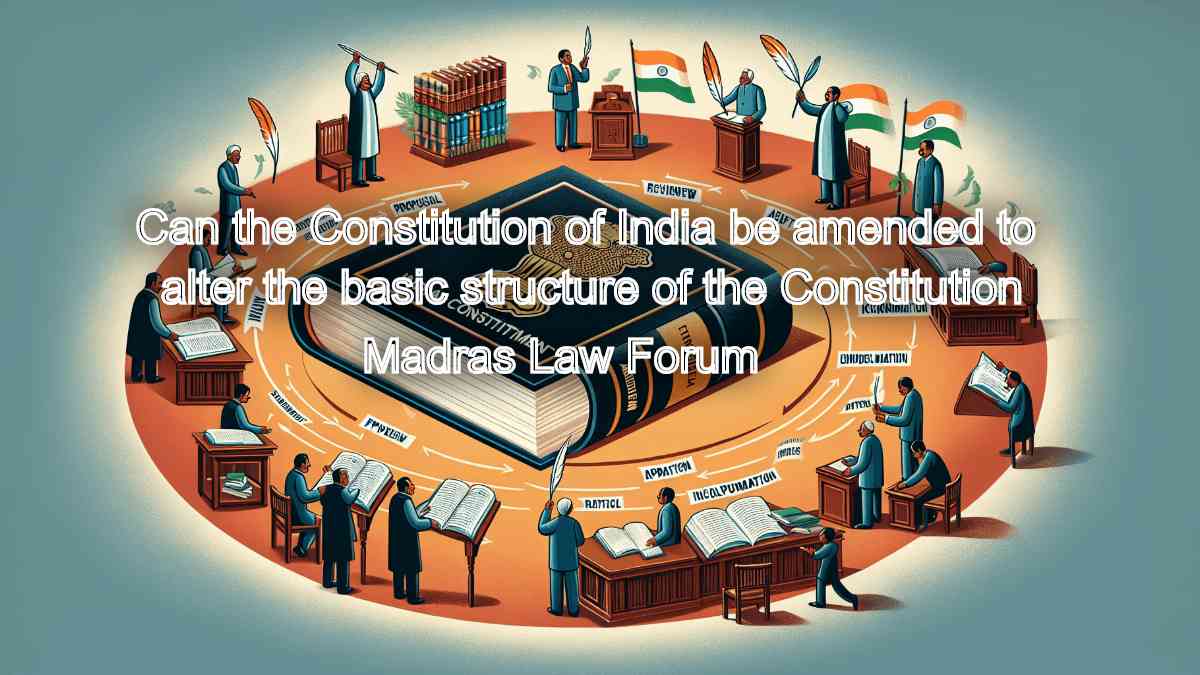
The Constitution of India, a foundational document outlining the framework of the Indian democracy, is subject to amendments. Legal experts and judges, however, have intensely debated the possibility of amending the Constitution to alter its basic structure. In this article, we will delve into the concept of the basic structure of the Constitution, explore the constitutional provisions related to amendments, and examine the landmark case of Kesavananda Bharati v. State of Kerala.
Can the Constitution of India be Amended to Alter the Basic Structure of the Constitution: Madras Law Forum
The Basic Structure Doctrine
The basic structure doctrine, propounded by the Supreme Court of India in the landmark case of Kesavananda Bharati v. State of Kerala (1973), posits that certain fundamental features of the Constitution are inviolable and cannot be amended. These features constitute the core of the Constitution and are essential for its democratic character and integrity.
While the exact contours of the basic structure have been subject to judicial interpretation over time, some key elements generally considered to be part of the basic structure include:
- Sovereignty, Unity, and Integrity of India: The Constitution establishes India as a sovereign, united, and integral nation. Any amendment that seeks to undermine these fundamental features would be unconstitutional.
- Federalism: The Constitution establishes a federal system of government, dividing powers between the Union and the States. The Supreme Court can deem amendments that significantly alter the federal balance of power unconstitutional.
- Secularism: India is a secular state, ensuring religious neutrality and freedom of religion. Amendments that compromise the secular character of the Constitution would be invalid.
- Democracy: The Constitution guarantees democratic principles, including the right to vote, freedom of speech, and the rule of law. Amendments that undermine these democratic principles would be unconstitutional.
- Republicanism: India is a republic, governed by elected representatives. Amendments that seek to establish a monarchy or other non-republican form of government would be invalid.
- Fundamental Rights: The Constitution guarantees fundamental rights to all citizens, including the right to life, liberty, equality, and freedom of expression. Amendments that curtail these fundamental rights would be unconstitutional.
Constitutional Provisions Related to Amendments
Article 368 of the Constitution provides the procedure for amending the Constitution. It states that the Constitution can be amended by a simple majority of the Lok Sabha (the lower house of Parliament) and a two-thirds majority of the Rajya Sabha (the upper house of Parliament). However, certain provisions relating to the federal structure, fundamental rights, and procedures for amending the Constitution itself require a special majority of two-thirds of the members present and voting in each House, as well as ratification by at least half of the States.
Kesavananda Bharati v. State of Kerala
The landmark case of Kesavananda Bharati v. State of Kerala (1973) significantly shaped the understanding of the basic structure doctrine. The Supreme Court ruled that the Constitution is amendable, but not to the extent that it alters its basic structure. The Court stressed that the power to amend the Constitution is not absolute and must be used to uphold the Constitution's core principles.
The decision in Kesavananda Bharati has had a profound impact on Indian constitutional law. It has served as a safeguard against attempts to undermine the fundamental principles and values enshrined in the Constitution.
FAQs on Amending the Constitution of India
The Supreme Court of India established the basic structure doctrine,
asserting that certain fundamental features of the Constitution of India. These essential features uphold the democratic character and integrity of the Constitution.
Some examples of the basic structure include:
Sovereignty, unity, and integrity of India
Federalism
Secularism
Democracy
Republicanism
Fundamental rights
Article 368 outlines the procedure for amending the Constitution. Generally, amendments require a simple majority of the Lok Sabha and a two-thirds majority of the Rajya Sabha. However, certain provisions require a special majority and ratification by at least half of the States.
No, the basic structure doctrine prohibits amendments that seek to alter the fundamental features of the Constitution. These features cannot be changed and are inviolable.
The Kesavananda Bharati case established the basic structure doctrine and clarified the limits of the power to amend the Constitution. The case has had a profound impact on Indian constitutional law and has served as a safeguard against attempts to undermine the fundamental principles of the Constitution.
Conclusion
Considerable debate and judicial scrutiny have centered around the question of whether the Constitution of India can be amended to alter its basic structure. The basic structure doctrine, as articulated in Kesavananda Bharati v. State of Kerala, provides a framework for interpreting the scope of constitutional amendments. The Constitution can be amended, but it's crucial to avoid amendments that undermine the fundamental principles of Indian democracy.
Read More
- Unlock Success: India Entry Services for Business Consultants
- What is administrative law in India? Expert Legal Remedies
- What is Intellectual property law? How to find the Best Attorney?
- What is International Law and Its Relevance in India?
- What is tax law in India? Expert Taxation Lawyers in Chennai
- Ministry of Law and Justice:
Need Help With This Exact Issue?
Send the question directly. Mention your city and the stage of your matter.
Related Reading
This article shares general legal information only. It does not create any advocate-client relationship. Please consult a qualified advocate about your specific circumstances.